Master Class on Cost & Efficiency Expert in Financial Institutions (McCEEFI)-Self Paced
The McCEEFI program equips professionals in financial institutions to reduce costs, improve processes, and make evidence-based decisions. Using Lean and Six Sigma methods, participants learn to identify waste, analyse root causes and cost drivers, optimize resources, set meaningful KPIs, and create measurable improvement plans. The program emphasizes customer value, employee capability, inventory control, and continuous monitoring to support lasting operational and financial performance.
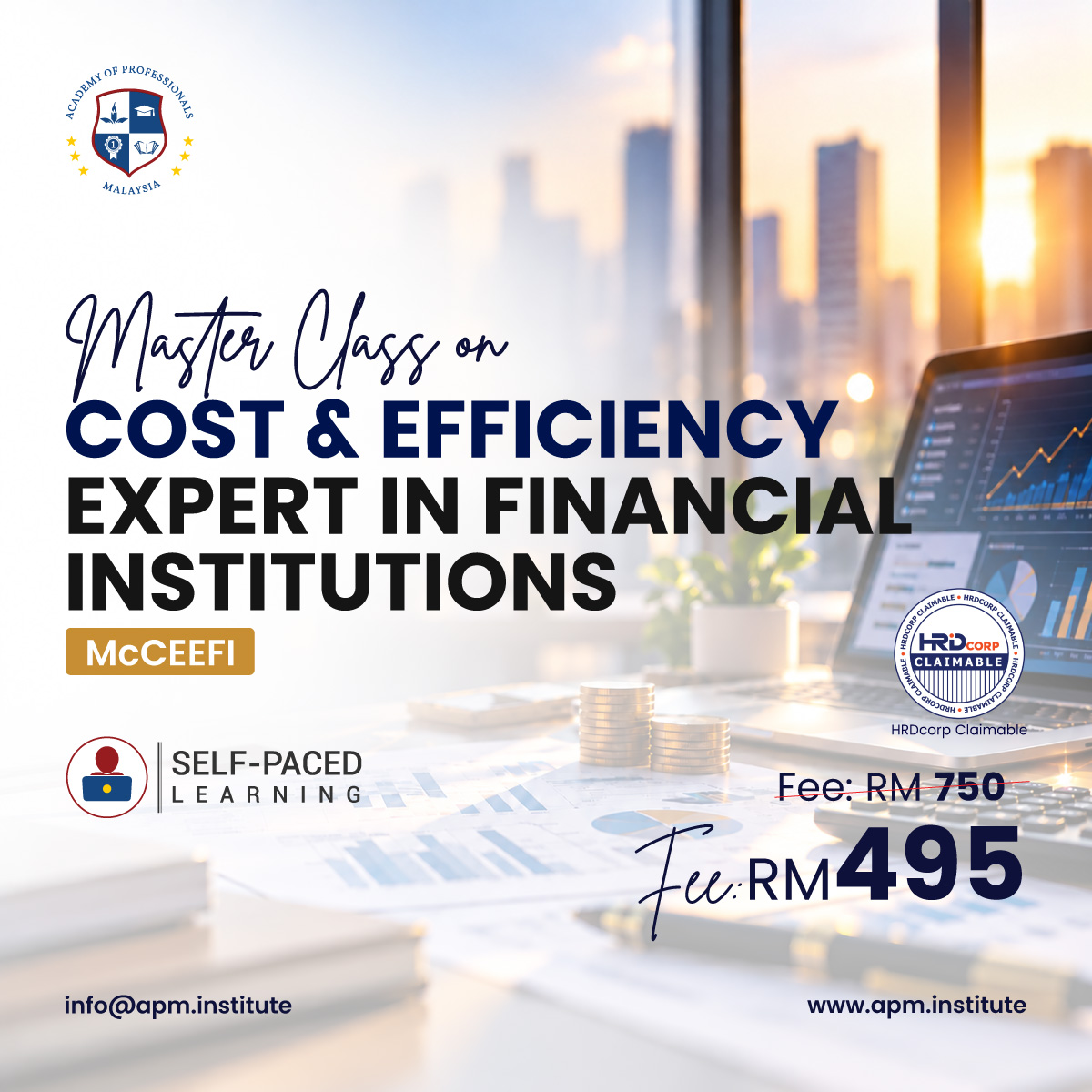
The Master Class on Cost & Efficiency Expert in Financial Institutions [McCEEFI] programme is designed to develop professionals' capabilities in cost optimisation, operational efficiency, process improvement, and evidence-based financial decision-making. The programme integrates Lean principles, Six Sigma methodologies, waste reduction, process analysis, root cause investigation, capacity planning, customer-focused performance measurement, and inventory management to support sustainable organisational performance. In a business environment characterised by cost pressures, resource constraints, operational complexity, and increasing customer expectations, organisations require professionals who can identify inefficiencies, improve workflows, optimise resource utilisation, and translate operational data into measurable financial and performance outcomes. This programme provides a structured approach to understanding value creation, eliminating non-value-adding activities, reducing process variation, and strengthening the connection between operational excellence and financial management. Through practical exercises, workplace scenarios, process-mapping activities, analytical tools, and structured problem-solving methods, participants will develop the ability to identify improvement opportunities, evaluate cost drivers, establish meaningful key performance indicators (KPIs), and formulate actionable improvement plans. The programme also emphasises customer value, employee capability, inventory control, continuous improvement, and disciplined performance monitoring. Upon completion, participants should be able to apply Lean and Six Sigma concepts to practical business challenges, support cost-efficiency initiatives, improve process performance, and contribute to financial sustainability through measurable, evidence-based operational improvements.
-
By the end of this programme, participants will be able to:
- Explain Lean and Operational Excellence Principles: Describe the principles of Lean management and their relevance to cost optimisation, process efficiency, customer value, and organisational performance.
- Identify Value-Adding and Non-Value-Adding Activities: Analyse workflows to distinguish activities that create customer value from activities that consume resources without proportionate value.
- Apply Six Sigma and Waste-Reduction Techniques: Use appropriate improvement concepts and tools to investigate defects, reduce process variation, and minimise operational waste.
- Analyse and Improve Business Processes: Apply process mapping, spaghetti diagrams, root cause analysis, and Pareto analysis to identify inefficiencies and prioritise improvement opportunities.
- Optimise Capacity and Workforce Utilisation: Evaluate workload, capacity constraints, and employee skill coverage to support effective resource allocation and operational planning.
- Translate Customer Requirements into Performance Measures: Interpret customer needs and establish relevant KPIs, performance baselines, and targets for cost, quality, delivery, and service.
- Strengthen Inventory and Resource Management: Apply inventory management principles to improve stock availability, reduce avoidable holding costs, and support operational continuity.
- Develop Structured Problem-Solving Capabilities: Apply continuous improvement methods and A3 problem-solving to define problems, investigate causes, and implement corrective actions.
- Evaluate Improvement Performance: Use operational and financial indicators to assess the effectiveness, sustainability, and potential business value of improvement initiatives.
- Integrate Cost Efficiency with Strategic Financial Management: Develop practical recommendations that align process improvements with customer expectations, financial objectives, risk considerations, and organisational priorities.
-
M-1 Introduction to Lean
M-2 Value-Adding and Non-Value-Adding Activities
M-3 Introduction to Six Sigma
M-4 8 Waste
M-5 Spaghetti Diagram
M-6 Process Mapping
M-7 Root Cause Analysis
M-8 Pareto Analysis
M-9 Capacity Planning and Skill Mapping
M-10 Voice of Customers and Setting KPIs
M-11 Inventory Management
M-12 Continuous Improvement & A3 Problem Solving
-
Exam Method:
Number of Online Final Exams: 01
Online MCQ (Multiple Choice Question) Exam
- Number of MCQ Questions: 20
- Exam Duration: 20 Minutes
- Total Marks: 40
- Pass Mark: 70%
Assignment:
- Master Class Assignment: 01
- Total Marks: 200
- Pass Mark: 70%
-
Upon successful completion of the programme, participants will be able to:
- Explain the principles of Lean and Six Sigma and identify suitable applications in financial and operational management.
- Classify process activities according to customer value and identify opportunities to reduce avoidable resource consumption.
- Identify the eight commonly recognised categories of operational waste and recommend appropriate reduction measures.
- Construct process maps and spaghetti diagrams to document workflows, movement, delays, hand-offs, and potential bottlenecks.
- Conduct structured root cause investigations and use Pareto analysis to prioritise significant operational problems.
- Assess workforce capacity, workload requirements, and skills coverage to support resource planning and process continuity.
- Translate customer requirements into measurable KPIs, baselines, targets, and performance review arrangements.
- Apply inventory management principles to analyse stock levels, replenishment requirements, and inventory-related cost drivers.
- Develop an A3 problem-solving report containing a clear problem statement, evidence-based analysis, proposed countermeasures, and an implementation plan.
- Evaluate improvement initiatives using relevant operational and financial indicators and recommend actions to sustain measurable gains.

This program is organized by the Academy of Professionals Malaysia (APM).

This program is Validated and Quality Assured by the World Academy for Research and Development.
-
- Practical Focus Modules: 12
- Post-Completion
- Electronic Certificate
-
Lean Management and Value Optimisation
- Ability to analyse operational workflows, identify customer value, and recommend measures to reduce unnecessary activities and resource consumption.
Six Sigma and Process Improvement
- Capability to apply structured, data-informed improvement methods to investigate defects, reduce variation, and improve process consistency.
Process Mapping and Waste Analysis
- Competence in documenting processes, analysing movement and hand-offs, identifying the eight wastes, and highlighting opportunities for workflow improvement.
Root Cause Analysis and Problem-Solving
- Ability to distinguish symptoms from underlying causes, evaluate supporting evidence, and develop practical countermeasures to prevent recurring problems.
Cost and Operational Performance Analysis
- Capability to interpret relevant cost and performance data, establish baselines, assess improvement opportunities, and support evidence-based management decisions.
Capacity and Workforce Planning
- Competence in assessing workload, available capacity, resource constraints, and employee skill coverage to support efficient operational planning.
Customer-Centred KPI and Inventory Management
- Ability to translate customer expectations into meaningful performance measures and apply inventory management principles to balance availability, cost, and operational requirements.
Continuous Improvement and A3 Problem-Solving
- Capability to structure improvement initiatives, communicate findings, assign actions, monitor results, and sustain improvements through standardisation and review.
HRDC Provider Approved

RM: 495.00
RM 750.00
Total Hours
12 Hours
Course Type
Self Paced